Quick answer: Diabetes and eating disorders overlap more than most people realize, especially because diabetes management already asks someone to track, monitor, and be strategic with food every day. That daily attention can mirror disordered eating, and it’s not a personal failing, it’s an understandable response to a demanding condition. Support that treats both the diabetes and the eating disorder together is what tends to help.
Diabetes might be the only serious medical condition people still feel comfortable turning into a punchline. Every Halloween, “don’t eat all that candy or you’ll get diabetes” gets tossed around like a harmless joke, at parties, in group chats, in the comments section of every post.
Here’s what that joke misses: for someone actually living with diabetes, food is already something they think about constantly. It’s already a condition that asks them to track, monitor, and make decisions about eating multiple times a day. Add a culture that treats diabetes as a moral failing, and it’s not hard to see how that daily pressure can shape an already difficult relationship with food.
This blog post is about that overlap: why diabetes and eating disorders show up together more often than people realize, why the jokes make things harder, and what actually helps.
What’s the Connection Between Diabetes and Eating Disorders?
People with diabetes face a meaningfully higher risk of developing an eating disorder, and it’s not a coincidence.
Managing diabetes well, by most medical standards, means paying close attention to food, counting carbohydrates, reading labels, timing meals around insulin or medication, and watching numbers on a glucose monitor and adjusting based on what they mean. These are the tools of diabetes management, and for a lot of people, they work!
But look closely at that list, and you’ll notice it overlaps almost exactly with the behaviors that can mirror disordered eating: constant food monitoring, rigid rules, guilt over “bad” numbers, a running mental tally of what’s been eaten and what hasn’t. Someone managing diabetes well and someone in the grip of disordered eating can look strikingly similar from the outside, and sometimes even from the inside.
This isn’t a personal failing or a sign that someone is “doing diabetes wrong.” It’s a reasonable response to a condition that asks so much of someone’s relationship with food, every single day, for the rest of their life.
Why Diabetes Gets Treated Like a Punchline (and Why It Fuels Eating Disorders)
The “you’ll get diabetes” joke turns a serious medical condition into a verdict about what someone eats or how much willpower they have, and that stigma has real consequences.
It’s worth saying plainly: it’s not your fault if you have diabetes. You didn’t do anything to cause this diagnosis. Genetics, autoimmune processes, and factors entirely outside anyone’s control all play a role, far more than your food choices ever could.
When diabetes gets framed as something people “deserve” or bring on themselves, blame and shame follow close behind. That shame can make people hide their struggles instead of asking for help. It can make someone skip appointments because they don’t want to be lectured about their numbers again. It can make a hard diagnosis feel like a personal indictment instead of a medical condition deserving care and compassion.
At We All Eat, we hold a weight-inclusive, no-shame view of health. Diabetes is a medical condition, not a character flaw, and no one should have to carry stigma on top of the daily work of managing it.
Type 1 Diabetes and Eating Disorders
The overlap between diabetes and eating disorders is especially significant for people with type 1 diabetes.
One pattern that shows up in type 1 diabetes deserves particular attention: some people reduce or skip the insulin their body needs as a way of restricting. This is a serious warning sign, not a strategy, and it carries real physical risk. It’s more common than most people realize, and it’s treatable with the right support.
If this sounds familiar, either in your own experience or in someone you care about, please know this isn’t a small thing to manage alone. It deserves specialized, urgent attention from a care team who understands both diabetes and eating disorders.
Binge Eating and Diabetes, Anorexia and Diabetes
Eating disorders in people with diabetes don’t look just one way.
Binge Eating and Diabetes
Bingeing often shows up after a period of restriction, or after someone’s numbers or food choices get labeled as “bad” in their own mind. It can bring a strong sense of loss of control, followed by guilt that fuels the next round of restriction. For many people, it becomes the restrict-binge cycle: tightening the rules, feeling deprived, eating past comfort, and tightening the rules again.
If any of this feels familiar, our post on the restrict-binge cycle walks through why that pattern happens and why it has nothing to do with willpower.
Diabetes management can interact with this pattern directly, since blood sugar itself shifts with under-eating, overeating, and the emotional weight of it all. Meaning, the individual has to be able to anticipate blood sugar changes and dose insulin accurately (if they’re utilizing this medication).
Anorexia and Diabetes
Restriction can also show up on its own, cutting intake far below what someone’s body actually needs, sometimes wrapped in the language of “good control” or “being disciplined.”
Signs an Eating Disorder May Be Developing in Someone With Diabetes
Watch for shifts in how food and numbers occupy your mental space, not just what’s on your plate.
A few things worth paying attention to:
- Food, carb counts, or blood sugar numbers causing an increase in anxiety
- Guilt or anxiety shows up around eating, even after a meal that fits your diabetes management plan
- Insulin doses get skipped, reduced, or kept secret
- Diabetes appointments or check-ins start getting avoided
- Management swings between rigid perfection and giving up entirely, with little in between
None of these signs mean you’re failing at managing your diabetes. They mean it might be time for extra support. For a broader look at what to watch for, our post on disordered eating red flags covers more of these patterns in detail.
How to Support a Healthier Relationship with Food and Diabetes
Healing is possible, and it doesn’t mean choosing between managing diabetes well and feeling at peace with food.
The most effective support tends to be integrated: a dietitian, medical provider, and mental health professional working together, rather than any one person carrying the whole picture. Weight-inclusive, non-diet care makes room for both realities at once, that blood sugar matters and that food doesn’t have to be a battle.
A few things that tend to help along the way:
- Practicing self-compassion instead of self-criticism when numbers or choices don’t go as planned
- Letting go of “good” and “bad” labels for both foods and blood sugar readings
- Working with a team that understands eating disorders, not just diabetes, or vice versa
If you’re curious about where disordered patterns end and a diagnosable eating disorder begins, our post on disordered eating vs. eating disorder breaks down that difference.
Finding Support for Diabetes and Eating Disorders
This overlap is common, and it isn’t a failure of willpower or discipline. Burnout is common too, and it’s okay. Managing a chronic condition every day, for years, while also trying to have peace with food is genuinely hard work, and needing a break from it doesn’t mean anything has gone wrong.
Specialized, integrated care exists for exactly this. The National Alliance for Eating Disorders offers a free helpline at 1-866-662-1235, Monday through Friday, 9 a.m. to 7 p.m. ET, staffed by licensed therapists who can help with referrals. If insulin restriction or an eating disorder involving type 1 diabetes is part of what’s going on, the Diabulimia Helpline is available 24/7 at 425-985-3635.
And one more thing worth saying gently: if insulin is being skipped or blood sugar feels out of control, that’s a reason to reach out to a medical provider soon, not a reason for alarm or shame. Getting support quickly is an act of care, not a crisis.
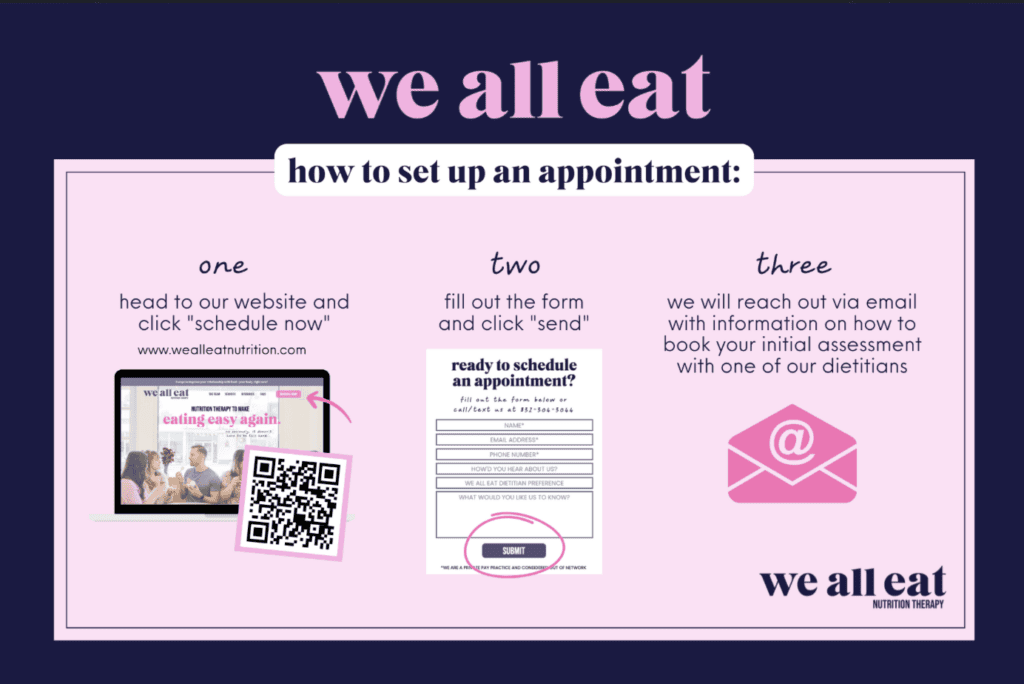
Our team at We All Eat Nutrition Therapy offers compassionate, weight-inclusive support for people managing diabetes alongside disordered eating or an eating disorder. Submit an appointment request here, or call or text 832-304-3044, and we’ll help you get started.
Frequently Asked Questions
Can you have diabetes and an eating disorder at the same time?
Yes. Diabetes and eating disorders can and do coexist, and the overlap is more common than most people expect, particularly because diabetes management involves so much daily attention to food.
Does having diabetes cause eating disorders?
Diabetes itself doesn’t cause an eating disorder, but the constant food monitoring that diabetes requires can create conditions where disordered patterns are more likely to take hold, especially without the right support.
Are people with type 1 or type 2 diabetes more at risk?
Both are associated with a higher risk of eating disorders, though the overlap with type 1 diabetes is especially well documented, in part because of the added risk of insulin restriction.
What are the signs of an eating disorder in someone with diabetes?
Common signs include food or blood sugar numbers taking over someone’s mental space, guilt around eating, secrecy about insulin use or management, skipped appointments, and swinging between rigid control and giving up entirely.
Can eating “too much sugar” cause diabetes?
No. Type 1 diabetes is an autoimmune condition, and type 2 diabetes involves a complex mix of genetics, biology, and other factors, not a night of Halloween candy that people joke about.
How are diabetes and eating disorders treated together?
The most effective approach is integrated care, bringing a dietitian, medical provider, and mental health professional together so that blood sugar management and healing someone’s relationship with food are supported at the same time.
Diabetes and Eating Disorders Deserve to Be Taken Seriously
Diabetes deserves to be treated as the serious medical condition it is, not a punchline about willpower or dessert. And the toll it can take on someone’s relationship with food deserves to be taken just as seriously.
Struggling with this overlap is common, support works, and no one has to untangle it alone.
If you’re ready for that support, our team at We All Eat Nutrition Therapy is here. Submit an appointment request, we’d love to help.
Written by intern Kaitlyn Friedrichs