Quick answer: The symptoms of disordered eating are often easy to miss because they can look like discipline or “healthy” habits. The earliest signs tend to show up in how someone thinks and feels about food (preoccupation, a growing need for control, anxiety around eating, and guilt) more than in what they actually eat.
Picture someone who seems to have it all figured out with food. They never miss a workout, they read every label, and they can tell you what’s in just about anything.
From the outside, it looks like health, maybe even the kind of discipline other people wish they had.
But on the inside, eating feels like a job that never clocks out. There’s a low hum of stress before meals. A mental tally running in the background. A little knot of worry when plans change or the menu is unfamiliar.
That gap (looking fine, feeling drained) is a big part of why the early signs of disordered eating slip by so often. The behaviors get praised, and the distress stays private.
In this post, we’re covering the early symptoms of disordered eating that tend to go unnoticed, why they’re so easy to overlook, and how to tell disordered eating apart from healthy eating. We’ll also talk about what support can look like if any of this feels familiar.

What Is Disordered Eating?
Disordered eating is a range of food and body-related thoughts and behaviors that cause distress or take up significant mental and emotional energy, but may not meet the full criteria for a diagnosed eating disorder.
It lives on a spectrum. On one end, an occasional food rule or a guilty feeling after eating. On the other, patterns that start to control daily life… what someone eats, when, where, and how much room food takes up in their mind.
Here’s the part worth holding onto: you don’t have to be at the most severe end of that spectrum for your experience to be deserving of help.
Why Are the Early Symptoms of Disordered Eating So Easy to Miss?
The early symptoms of disordered eating are easy to miss because so many of them overlap with habits our culture applauds.
Think about what tends to get complimented: cutting out sugar, eating “clean,” smaller portions, more discipline, more control.
When a behavior earns praise, it rarely gets a second look. Nobody pulls you aside to check in because you turned down dessert or started tracking everything you eat. So the signs of disordered eating hide in plain sight.
Something that might be an early signal of struggle gets reframed as dedication. Often the person can’t see it in themselves either, because everyone around them is saying they’re doing it all right.
This isn’t about a lack of self-awareness or a personal flaw. The signs are genuinely camouflaged… dressed up as virtue, willpower, or “being good.” That’s what makes them so easy to walk past.
Want to learn more? Check out our blog post Disordered Eating vs. Eating Disorder: What’s The Difference?

What Are the Early Signs and Symptoms of Disordered Eating?
The clearest early signs often have less to do with what’s on the plate and more to do with what’s happening in someone’s head around food.
Here are some of the experiences that tend to show up first.
When Food Takes Up a Lot of Mental Space
One of the earliest signs is how much room food starts to occupy in your mind. You might catch yourself planning lunch while you’re still eating breakfast, or thinking through tomorrow’s meals hours ahead of time.
There’s a quiet, constant calculation running… what to eat, what you already ate, what comes next. Caring about food is human. But when food becomes a near-constant mental companion, that’s worth noticing.
A Growing Need for Food Control
Food control can feel productive at first, even responsible. A sign worth paying attention to is when eating stops feeling flexible and starts feeling like something that has to be managed.
Maybe a change of plans throws off your whole day. Maybe eating something off-script leaves you rattled in a way that feels bigger than the food itself.
When control becomes the thing holding everything together, losing it can feel destabilizing.
Subtle Food Restriction
Food restriction doesn’t always look like a formal diet. Often it shows up quietly, framed as a “preference,” a sensitivity, or simply “eating healthy.”
A food group gets dropped. Then another. Rules build up slowly enough that each one feels reasonable on its own.
Looking back, though, the list of “off-limits” foods has quietly grown, and the list of accepted foods has become smaller and more rigid than it used to be.
Anxiety and Food
For some people, food and anxiety become tightly linked. Eating something unfamiliar, going to a restaurant, or having a meal someone else prepared can bring real stress (sometimes before the food is even on the table).
There might be relief once a “safe” choice is made, followed by guilt if it wasn’t. When eating regularly comes with a wave of anxiety, that tension is a telltale signal.
Guilt or Moral Judgment Around Eating
Another early sign is when food starts to carry a moral weight. Some foods feel “good,” others feel “bad,” which can quietly shape how you feel about yourself for the rest of the day.
A meal becomes something you either succeeded or failed at.
When self-worth gets tangled up with food choices, eating turns into a test instead of something nourishing.
Less Flexibility, Less Connection
Over time, a strained relationship with food can start to shrink your world a little.
Maybe you skip out on dinners because you can’t predict the menu, or you go but spend the whole time preoccupied instead of present. The flexibility that lets food be social, spontaneous, and easy slowly dwindles.
When eating starts costing you connection, that’s worth gently paying attention to.
Disordered Eating vs. an Eating Disorder: What’s the Difference?
The main difference is that an eating disorder is a diagnosable mental health condition with specific clinical criteria, while disordered eating describes problematic patterns that cause distress, but may not meet full criteria yet.
It helps to picture a spectrum rather than two separate boxes. Disordered eating and diagnosed eating disorders share a lot of the same territory (food rules, anxiety, guilt, control) often differing in intensity, frequency, and how much they interfere with daily life.
What matters most: you don’t need a diagnosis to deserve support.
Waiting until things feel “bad enough” usually means waiting longer than you need to. Struggling is reason enough.
To learn more, read our blog post Disordered Eating vs. Eating Disorder: What’s The Difference?

How Do You Know If It’s Disordered Eating or Just Healthy Eating?
The clearest difference isn’t what you eat, it’s how much flexibility, peace, and freedom your eating leaves room for.
Eating that supports your life tends to feel like this:
- There’s room for a spontaneous meal out or a food you love just because you love it
- A last-minute change of restaurant, or dinner running late, doesn’t throw off how you eat that day
- Food can be social and easy, not something you brace yourself for
- You can care about nourishment and still feel at ease
Eating based on anxiety and rules tends to feel different:
- The food rules are rigid, and bending one brings guilt
- Food decisions come with a layer of stress that doesn’t quite let up
- Unfamiliar foods or unplanned meals feel outright uncomfortable
- Eating enjoyment gets crowded out by the work of staying “on track”
So the question isn’t really “is this food healthy?” It’s closer to “how much room does my relationship with food leave for actually living?”
Caring about nourishment and feeling at ease around food can absolutely coexist. When they stop coexisting is the part worth noticing.
What to Do If These Signs Feel Familiar
If you read through this and saw pieces of your own experience, take a breath. Recognizing yourself here is incredibly common, and it doesn’t mean you’ve failed at anything.
It also doesn’t mean the answer is more willpower or a stricter plan.
Patterns like these tend to ease with the right kind of support, not more pressure. A relationship with food that’s grown stressful can become a more peaceful one, and that work usually goes better with someone alongside you.
A few gentle next steps:
- Reach out to a non-diet, weight-inclusive dietitian or therapist who specializes in disordered eating. They can help you make sense of what’s going on without judgment, and at a pace that feels doable.
- Lean on a free helpline if you’d like support right away. The National Alliance for Eating Disorders runs a helpline staffed by licensed clinicians who can listen and help you find next steps, including a therapist and treatment finder. Call 1-866-662-1235, Monday to Friday between 7am-5pm
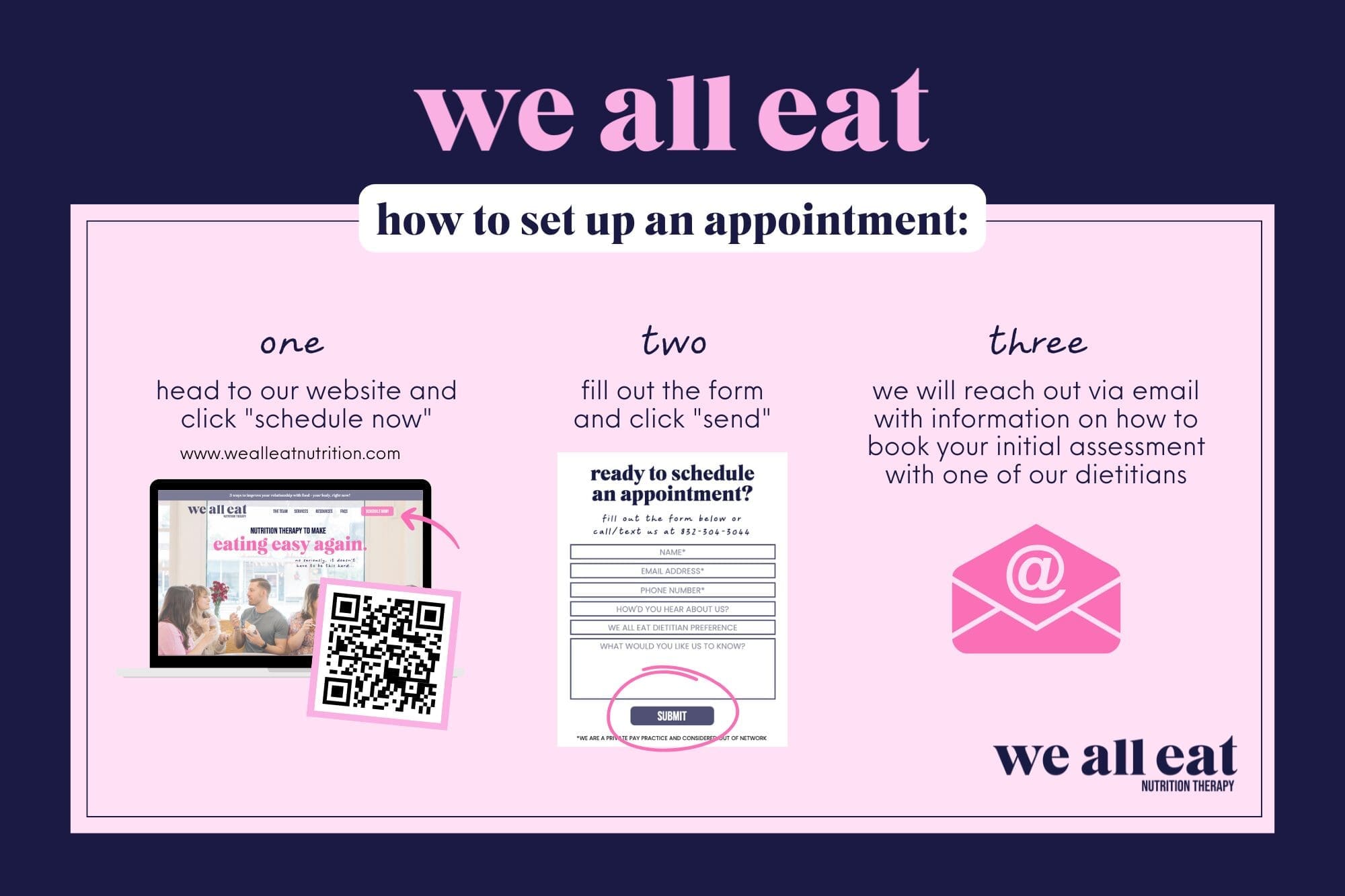
- Connect with our team for ongoing care. That’s exactly what we’re here for. You can submit an appointment request or call or text us, and we’ll help you get set up.

Frequently Asked Questions About Disordered Eating
What are the symptoms of disordered eating?
Symptoms of disordered eating include preoccupation with food, a strong need to control eating, food restriction framed as “preferences” or health, anxiety around eating, and guilt tied to food choices.
These signs often show up in how someone thinks and feels about food rather than in obvious behaviors, which is part of why they’re so easy to overlook.
Is disordered eating the same as dieting?
Not exactly, though they overlap. Dieting is often where disordered patterns begin, since restriction, food rules, and guilt can stem from it over time.
The difference usually comes down to how much distress, rigidity, and mental space the behaviors around food take up.
Can you have disordered eating and still appear healthy?
Yes. Disordered eating isn’t something you can see from the outside, and many people who struggle seem completely fine or even health-focused to others.
How someone looks isn’t a reliable measure of their relationship with food.
When does wanting to eat healthy become a problem?
Wanting to eat in a nourishing way isn’t a problem on its own. It can become one when the rules around it create anxiety, guilt, or rigidity, and when they start crowding out flexibility and enjoyment.
The shift is less about the food itself and more about how it feels and how much it shapes your day.
Is anxiety around food a sign of disordered eating?
It can be. Regular stress before eating, fear around unfamiliar foods, or anxiety about meals you didn’t prepare yourself can all be signs that your relationship with food is causing distress.
Occasional nerves are normal; ongoing anxiety around eating is worth paying attention to.
Do I need a diagnosis to get help?
No. You don’t need a formal diagnosis, or to be at any particular point, to deserve support. If your relationship with food is causing you stress, that’s reason enough to reach out.
Recognizing the Symptoms of Disordered Eating
The earliest signs of disordered eating are quiet. They look like discipline, they earn compliments, and they rarely announce themselves, which is exactly why they get missed for so long.
Noticing them is a meaningful step. Not a diagnosis, not a label, just a moment of paying attention to something that’s been hard. Wherever you are with food, your experience is worth taking seriously, and support is here when you’re ready for it.
If food or your relationship with your body feels complicated right now, our team offers compassionate, weight-inclusive care. Reach out anytime, we’d love to help.