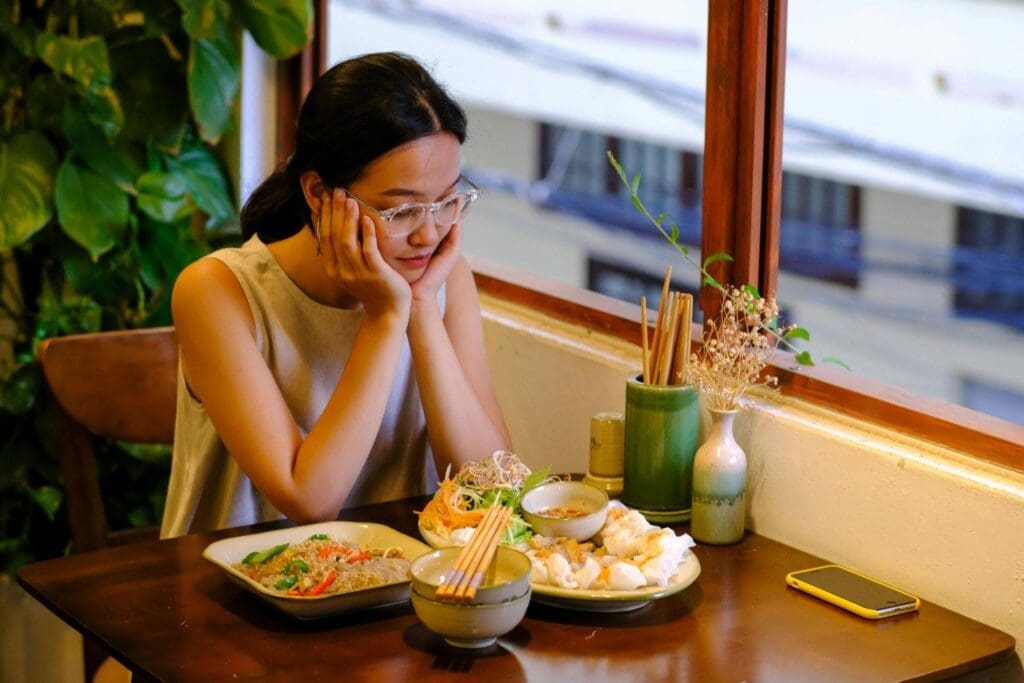
If you’ve ever opened the fridge, stared at the shelves, and closed it again because nothing felt right, or scrolled through a restaurant menu before you’ve even left the house, weighing your options, second-guessing yourself, dreading the moment you have to order, you may be experiencing food anxiety.
If any of this sounds familiar, you’re not alone. Food anxiety is far more common than most people realize, and it doesn’t mean something is wrong with you. It often means you’ve absorbed years of conflicting messages about what, when, and how you “should” be eating, and your nervous system is responding accordingly.
In this post, we’ll walk through what food anxiety is, why it happens, how it shows up in everyday life, and gentle ways to begin feeling safe around food again.

What Is Food Anxiety?
Food anxiety is the persistent worry, fear, or stress that comes up around eating, choosing food, or thinking about how food might affect your body. It can be loud and constant, or quiet and humming in the background of your day.
For some people, food anxiety looks like occasional guilt after a meal that felt “too much.” For others, it’s a daily, intrusive presence that shapes nearly every decision, what to order, when to eat, who to eat with, or whether to eat at all.
Food anxiety exists on a spectrum, and wherever you fall on it, your experience is valid.
It’s also important to know this: food anxiety is a learned response, not a personal flaw. It’s not a sign of weakness, lack of willpower, or being “too sensitive.”
It’s something your mind and body have learned over time, often in response to diet culture, life experiences, or past patterns with food, which means it can also be unlearned.
Common Signs of Anxiety and Food Struggles
Food anxiety doesn’t always look the way people expect. It’s not always panic or tears at the dinner table. Sometimes it’s subtle, woven into thoughts and habits that have started to feel normal.
Here are some of the ways it commonly shows up.
Mental and Emotional Signs
- Ruminating about what to eat throughout the day
- Counting, tracking, or mentally tallying food obsessively
- Fear of certain foods or entire food groups
- Food guilt or food shame after eating
- Feeling “out of control” around certain foods, especially ones you’ve restricted
- Replaying meals or food choices long after they’re over
Physical and Behavioral Signs
- Skipping meals to feel “safe” or “in control”
- Rigid food rules that feel impossible to break
- Anxiety in the lead-up to social eating situations
- Feeling nauseous, tense, or shaky at mealtimes
- Avoiding eating in front of others
- Eating very quickly, very slowly, or in ways that feel disconnected from hunger
If you recognize yourself in some of these, it doesn’t mean you’ve “failed” at food. It means something is asking for your attention and care.
Why Does Food Feel So Stressful?
The connection between anxiety and food rarely comes out of nowhere. It’s usually shaped by years of messaging, experiences, and learned patterns.
Understanding the roots can help take some of the self-blame out of the picture, because this isn’t about willpower.
Diet Culture and the Pressure to “Eat Right”
We live in a culture that constantly labels foods as “good” or “bad,” “clean” or “junk,” “safe” or “off-limits.” When food is morally loaded, eating starts to feel like a test you can pass or fail.
That kind of pressure creates fear and confusion, especially when the rules keep changing depending on which trend is loudest that month.
A non-diet approach like intuitive eating offers a different path. One rooted in flexibility instead of rules.
A History of Restriction or Dieting
When the body has experienced restriction, whether from formal dieting, skipping meals, or under-eating, it adapts by becoming hyper-focused on food. This is a protective response, not a character flaw.
It’s also a major driver of the restrict-binge cycle, where periods of restriction lead to feeling “out of control” later, which often leads to more restriction. Anxiety thrives in that cycle.
Perfectionism and All-or-Nothing Thinking
If you tend to believe that one “wrong” food choice ruins the whole day, week, or “plan,” eating becomes high-stakes. Perfectionism turns small, normal moments into something to manage and stress over.
Past Experiences and Body Image Struggles
Comments from family members, weight stigma, bullying, sports environments, and other past experiences can leave a lasting imprint on how we feel about food and our bodies.
Many people carry years of unprocessed messages about their eating, their size, or their worth, and it shows up at the table.
Underlying Anxiety or Mental Health Factors
Food anxiety often overlaps with generalized anxiety, perfectionism, or disordered eating patterns. For some, food becomes one of the places anxiety lives most loudly.
Recognizing this overlap isn’t about pathologizing yourself, it’s about understanding that what you’re experiencing makes sense.
How Food Anxiety Affects Your Relationship with Food
When food feels stressful day after day, the effects ripple outward.
Chronic food stress can:
- Drown out hunger and fullness cues
- Erode trust in your own body
- Dim the joy and satisfaction of eating
- Make social situations involving food feel like obstacles instead of opportunities.
Over time, food anxiety can quietly shrink your world.
Here’s something else worth mentioning: sometimes disordered patterns feel like they’re “working.” The rules feel like control. The restriction feels like safety.
The thought of changing things feels like it would just make everything more stressful, so it can be tempting to leave it all alone.
That’s a common place to find yourself, and it makes sense. But staying stuck in food anxiety has its own cost, even when it doesn’t feel that way day to day. And while shifting these patterns can feel harder before it feels easier (that’s normal, because change is uncomfortable), peace with food is possible.
You don’t have to stay here. This isn’t the only way.
How to Feel Safe Around Food Again
There’s no quick fix for food anxiety, and we won’t pretend otherwise. But there are gentle, sustainable shifts that can begin to soften the stress.
Think of these as invitations, not rules.
Notice the Thoughts Without Judgment
You can’t shift what you don’t see. Start by paying attention to the thoughts that come up around food, without trying to fix or fight them. Curiosity is more useful than criticism here. “Oh, there’s that thought again” is enough.
Challenge the “Good” vs. “Bad” Food Narrative
When all foods are allowed to just be food, the moral weight starts to lift. This is the heart of food neutrality, the idea that a cookie isn’t a failure and a salad isn’t a virtue. They’re both just food. This shift takes time, and that’s okay.
Eat Consistently Throughout the Day
Under-eating, whether intentional or not, fuels food anxiety in a powerful way. When the body is undernourished, the brain becomes more preoccupied with food, not less. Regular nourishment throughout the day helps calm the nervous system and gives your mind room to think about other things.
Reconnect with Hunger, Fullness, and Satisfaction
If you’ve spent years overriding your body’s signals, reconnecting takes patience. Start small. Notice what hunger feels like before it becomes urgent. Notice when you’re starting to feel satisfied. Notice which foods actually feel good in your body. This is body trust, rebuilt one meal at a time.
Work on Food Guilt and Food Shame
Guilt and shame keep food anxiety stuck in place. The way through isn’t more discipline, it’s more compassion.
When guilt comes up, try gently asking, “Whose voice is this? Where did I learn this?” Self-compassion isn’t permission to ignore your needs, it’s the foundation that makes real change possible.
Build Support Around You
Healing your relationship with food is much easier when you don’t have to do it alone. That might mean leaning on safe people, setting boundaries around diet talk at family gatherings, unfollowing accounts that fuel anxiety, or working with a professional who gets it. Your environment matters.
When to Seek Professional Support
Some food anxiety is deeply rooted, and it deserves more than what a blog post can offer. Working one-on-one with a registered dietitian who specializes in disordered eating and food anxiety can make a real, lasting difference.
It may be time to reach out if:
- Food thoughts are taking up significant mental space each day
- You’re avoiding social situations because of food
- You’re experiencing physical symptoms like nausea, panic, or mental fatigue around eating
- The stress around food feels ongoing or is getting worse
- You’ve tried to work on this alone and feel stuck
Reaching out for support isn’t a sign that things have gotten “bad enough.” It’s a sign that you deserve care, and that you don’t have to keep figuring this out by yourself.
You Deserve Peace Around Food
Healing your relationship with food isn’t a destination you arrive at one day, fully healed and never anxious again. It’s a process, full of small shifts, gentle moments of self-trust, and the slow building of a new relationship with eating. The goal isn’t control. It’s flexibility. The goal isn’t perfection. It’s peace.
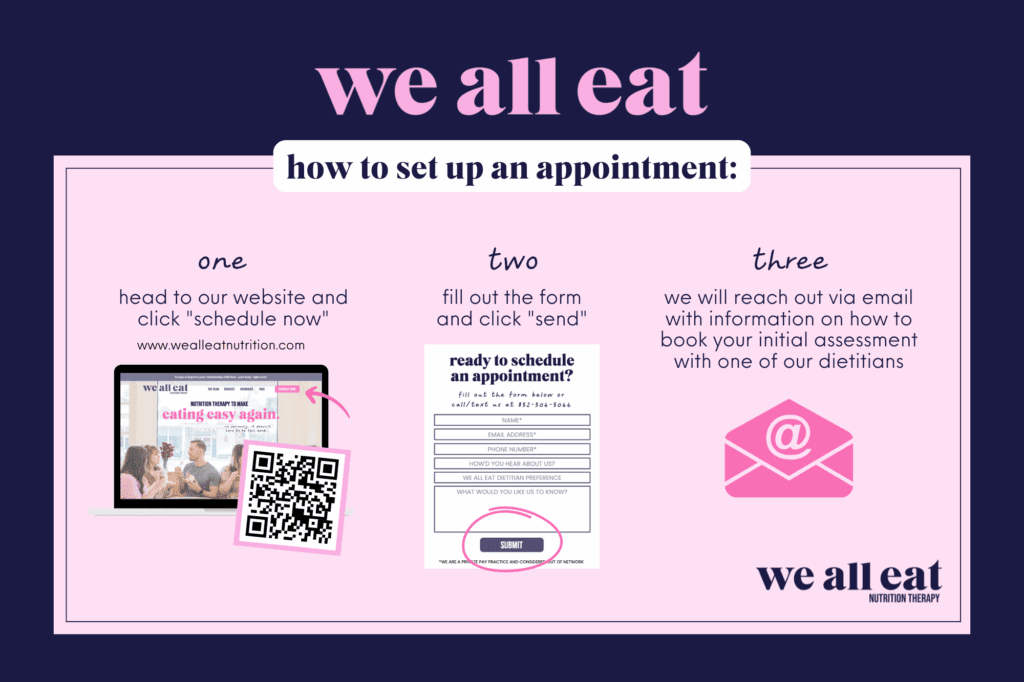
If you’re ready for support, our team at We All Eat Nutrition Therapy is here. We offer compassionate, weight-inclusive care for people working through food anxiety, disordered eating, and everything in between.Ready to take the first step? Submit an appointment request here, we’d love to help.