
If you’ve ever found yourself constantly thinking about food, second-guessing every bite, or feeling out of control around meals, you’re not alone.
Maybe you’ve convinced yourself it’s just “healthy eating” or “being disciplined.” But when food starts to feel overwhelming instead of nourishing, it could be a sign of something deeper.
If you’re tired of living in a loop of guilt, restriction, and anxiety about what you eat, then this blog post is for you.
Disordered eating doesn’t always look extreme or obvious—but it can quietly start to take over your life. The good news? Healing is possible.
Let’s talk about what disordered eating really is, common red flags to look out for, and how disordered eating recovery can help you rebuild a peaceful relationship with food.

What Disordered Eating Really Looks Like
Disordered eating is more common than many people think—and it doesn’t always look like a full-blown eating disorder. You don’t have to be underweight, skipping meals, or purging to be struggling. In fact, less than 6% of eating disorders occur in smaller bodies.
Disordered eating is any pattern of behaviors, thoughts, or feelings about food and your body that cause stress, guilt, or harm to your physical or emotional health.
Some common examples of disordered eating include:
- Obsessing over calories or macros
- Feeling guilty after eating “too much”
- Compensating for meals with exercise
- Cutting out entire food groups without a medical reason
- Eating “perfectly” during the week, then bingeing on weekends
- Constantly trying new diets or food rules
- Feeling out of control around certain foods
What makes disordered eating different from intentional health choices is the level of rigidity, obsession, and shame involved.
If food is taking up more space in your brain than it should, or if eating feels like a moral issue instead of a biological need, that’s a red flag.
Red Flag: “I Have a Hard Time with Food Control”
If you find yourself saying this, or thinking it silently, you’re not alone. Many people dealing with disordered eating feel out of control around food, especially foods they’ve labeled as “bad.”
This isn’t a sign of personal weakness. It’s a natural response to restriction. When your body (or brain) senses that food is limited or forbidden, it responds by increasing cravings and drive to eat.
This feeling of “losing control” is often tied to an all-or-nothing mindset. Maybe you restrict all day, then overeat at night. Or you “eat clean” all week, then binge on the weekends. This rollercoaster isn’t your fault, it’s your body trying to protect you from deprivation.
If this resonates, it’s time to release the belief that control equates to success. In disordered eating recovery, we focus on building trust with food—not control over it.

Red Flag: “I Have to Track Everything I Eat”
For many, common food tracking apps can quickly become a source of food anxiety and obsessive behavior.
If you panic when you don’t know the calories in something, or feel uncomfortable eating a meal out of the house because you can’t log it, that’s a sign that food tracking may be hurting your relationship with food.
Rigid tracking has many unforeseen consequences, such as:
- Making you disconnect from your body’s natural hunger and fullness cues
- Fueling guilt when you “go over” a predefined number of calories and/or macros
- Creating fear around spontaneous meals or social events
- Reinforcing the idea that food is only valuable when measured
You don’t need to count every bite to eat in a way that supports your health. In fact, letting go of the log can open up space for real connection with your body, values, and life.
If you’re not ready to stop tracking cold turkey, that’s okay. Disordered eating therapy with the support of our dietitians can help you explore your food anxiety and find new ways to feel safe and nourished, without the numbers.
Red Flag: “I Only Deserve to Eat If I’ve Exercised”
This is one of the most common beliefs people with disordered eating hold—thinking they need to “earn” their food.
If you’ve ever told yourself you can’t have dessert unless you hit the gym, or that you need to work off your meal, that’s a sign your relationship with food may be rooted in conditional permission.
But here’s something you need to remember: You deserve to eat, move, and rest simply because you’re a human being… not because of what your fitness tracker says!
This kind of food control, where eating depends on how “good” or “bad” you’ve been, can trap you in a cycle of guilt and burnout. It also robs food of its joy and nourishment.
Disordered eating recovery means learning to separate exercise from food rules. You can move your body because it feels good—not because it earns your next meal to dessert.
Red Flag: “I Hate How My Body Looks”
Body image issues and disordered eating often go hand in hand. If your eating habits are driven by the desire to shrink, control, or punish your body, it’s time to take a deeper look.
You might think, “If I just lose the weight, I’ll feel better.” But in reality, changing your body doesn’t automatically change how you feel inside.
That’s where disordered eating therapy with a dietitian comes in. A trained dietitian can help you challenge body negativity and explore body image through a lens of body trust and compassion
You don’t have to love your body to respect it. You can practice body neutrality—appreciating what your body does for you, even when it doesn’t look the way you wish.
Healing isn’t about reaching a certain weight. It’s about reclaiming your peace.

Red Flag: “I Panic If I Can’t Plan Every Meal”
Planning meals can feel safe, especially when food feels overwhelming. But when planning becomes rigid and fear-driven, it can lead to food anxiety and disconnect you from your body’s needs.
Here are some signs this might be happening:
- You avoid spontaneous meals or get anxious when plans change
- You feel unsafe without your normal meals/snacks or routines
- You fear “messing up” your day of eating if one meal changes
This type of food control can feel exhausting. It can also make it harder to listen to your body’s hunger, fullness, and satisfaction.
Disordered eating recovery teaches you to bring flexibility back to your meals—so food can feel more peaceful, not panicked.
What Disordered Eating Recovery Can Look Like
Disordered eating recovery isn’t just about changing what you eat. It’s also about healing how you think and feel around food. It’s about replacing guilt with confidence, fear with curiosity, and control with connection.
In disordered eating therapy, a dietitian can help you learn to:
- Tune into your hunger and fullness cues
- Let go of rigid food rules
- Build self-compassion and body trust
- Find joy and satisfaction in eating again
Working with a non-diet dietitian or therapist can help you walk this path with support, structure, and care.
You’re Not Alone And You Deserve Support
Maybe you saw yourself in some of these red flags. Maybe you’ve been living with them for years, thinking they were normal. But now you know… disordered eating doesn’t have to run your life.
You deserve to feel at peace around food. You deserve to trust your body. You deserve support!
Whether you’re just starting to question your relationship with food, or you’re ready to take the next step in disordered eating therapy, we’re here for you.
Our team of non-diet dietitians offers compassionate, evidence-based support to help you find freedom—without shame or restriction.
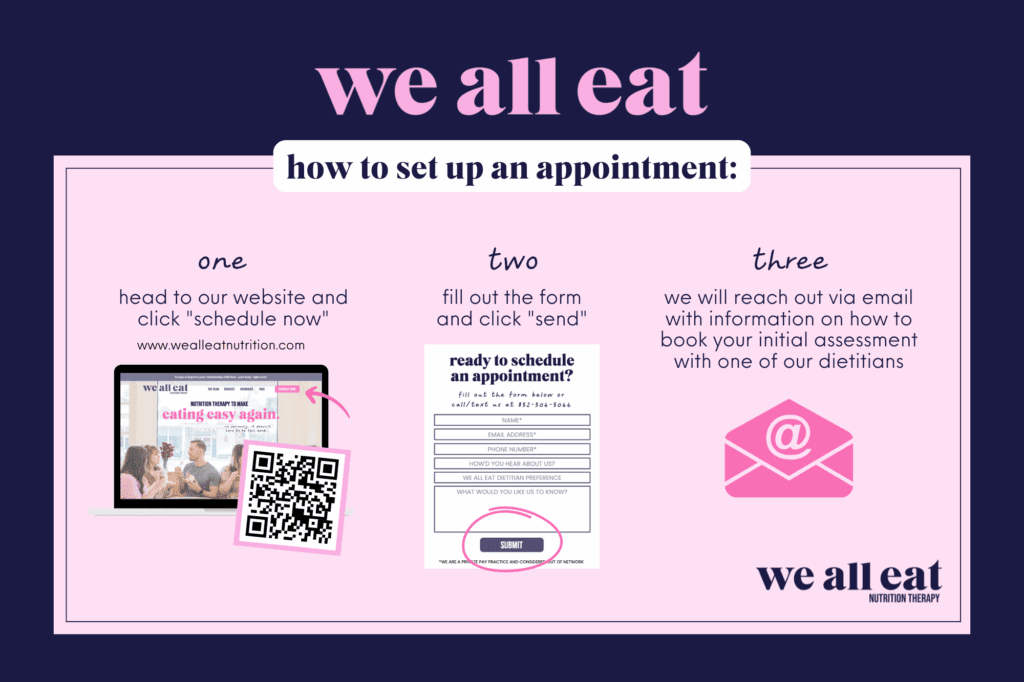
Book a session here to begin your disordered eating recovery with compassion, care, and the support you deserve.

