
If you’ve ever found yourself reaching for food in response to stress, boredom, sadness, or even celebration, you’re not alone. Emotional eating is incredibly common, and contrary to what diet culture tells us, it doesn’t mean you lack willpower or self-control.
In fact, emotional eating is a normal part of being human!
But when food becomes our main or only coping mechanism, it can lead to distress, food guilt, and confusion around how to truly meet our emotional needs. This blog will walk you through what emotional eating is, why it happens, how to recognize it, and most importantly—how to respond with compassion instead of criticism.

What Is Emotional Eating?
Emotional eating is the act of using food to cope with feelings. This might look like eating after a breakup, snacking mindlessly when you’re bored, or reaching for a bag of salty snacks to deal with a stressful workday.
While emotional eating is often portrayed as a problem, it’s important to remember: food is emotional.
Food can bring comfort, connection, nostalgia, and joy, so using it to soothe yourself doesn’t always have to be a bad thing.
The challenge arises when emotional eating becomes mindless, therefore disconnecting from our body, OR the only way we know to cope with emotions.
Why We Emotionally Eat
There are many reasons people turn to food in emotional moments:
- Soothing stress or anxiety: Eating can activate the parasympathetic nervous system and temporarily help us feel calmer.
- Distraction: Food may offer a break from overwhelming thoughts or emotions.
- Comfort and nostalgia: Certain foods may remind us of home, safety, or better times.
- Celebration or reward: We often use food to mark special occasions or give ourselves a treat after a tough day.
Diet culture can impact emotional eating as well . When we’re constantly told certain foods are “bad”, it can inversely increase one’s desire for that food due to it being off-limits.
The result? We end up craving these “off-limits” foods even more, feel out of control when we finally eat them, and then experience guilt afterward for how it all played out. Over time, this can create a cycle where food becomes tangled up with shame—especially in moments when we’re using it to cope in secret. Emotional eating isn’t always negative (think: celebrating with cake!), but when it becomes a hidden or guilt-producing habit, that’s when it can start to feel like a shameful secret instead of a coping mechanism.

Signs Your Emotional Eating Has Become a Problem
So how do you know if your emotional eating has gotten out of control? Here are a few signs to be aware of:
- Food is the only way to satisfy the feeling you’re experiencing
- You continue eating the food despite no longer enjoying it
- Eating feels ritualistic, automatic, or mindless
- You have to limit food the day after emotionally eating to feel comfortable in your body
- You feel shame, regret, or guilt after coping with food
- You’re constantly reaching for food independent of hunger/fullness signals
Bringing awareness to why we’re eating and what we’re choosing helps ensure we’re caring for ourselves appropriately in the moment. Knowing the signs of problematic emotional eating, can help you to know when it’s time to seek more support. Being able to identify what kind of need you’re experiencing—whether it’s physical or emotional—can help you respond with more intention. Be it food or other coping strategies!
How to Stop Emotional Eating
First things first: you don’t need to eliminate emotional eating entirely. The goal isn’t perfection—it’s awareness, compassion, and choice.
Here are a few supportive strategies for how to stop emotional eating from taking over:
1. Pause and Check In
When you notice the urge to cope with food, take a moment to ask:
- What am I feeling right now?
- When’s the last time I ate?
- What non-food comforts can help me in this moment?
- Am I okay with food being my coping skill of choice? Or do I want to try a non-food related coping skill first?
This pause creates space for you to explore your emotions without reacting impulsively.
2. Name the Emotion
Identifying your feelings (sadness, anxiety, boredom, loneliness, etc.) can be surprisingly powerful. Naming the emotion allows you to begin processing it rather than masking it with food.
3. Create a Coping Toolbox
Food might be one tool in your toolbox, but it helps to have others. Consider options like:
- Journaling
- Going for a walk
- Calling a friend
- Taking a shower or bath
- Doing a breathing exercise or meditation
The goal isn’t to distract yourself from emotions, but to expand your options for caring for them.
4. Ditch the Food Guilt
Guilt doesn’t prevent emotional eating—it feeds it. When you eat to cope with your emotions, and then beat yourself up afterward, you’re more likely to continue the cycle.
Instead, practice curiosity: Why did I eat? What was I needing in that moment? How can I support myself the next time I feel that way?
Food guilt has no place in healing your relationship with food. Every experience is a chance to learn, not punish yourself.
5. Feed Yourself Consistently
Restrictive eating—even when it’s not intentional—can make emotional eating more intense. If your body isn’t getting enough food, emotional urges to eat will feel even stronger.
Regular meals and snacks help stabilize blood sugar, improve mood, and reduce binge-like eating patterns.
When to Seek Emotional Eating Help
Occasional emotional eating is normal. But if you feel like food is your only way to cope, or you’re trapped in a cycle of guilt, restriction, and loss of control, it may be time to seek support.
Working with a non-diet dietitian can help you:
- Uncover the emotional and physical roots of your eating patterns
- Learn to identify and honor true hunger and fullness
- Reduce food guilt and shame
- Develop tools for coping with stress and emotions in supportive ways
At We All Eat Nutrition Therapy, our team of registered dietitians takes a compassionate, non-judgmental approach to healing.
We don’t believe in restrictive diets or “fixing” your body. Instead, we help you build trust with your body and use food as one part of a broader self-care plan.
Emotional eating is not a failure. It’s a signal.
It’s your body and brain telling you something needs attention—whether it’s stress, sadness, comfort, or unmet physical needs. With awareness, support, and a gentle approach, you can respond to those signals in a way that feels healing rather than harmful.
There is no need to feel ashamed of eating emotionally. And you don’t have to figure this out alone.
Looking for emotional eating help?
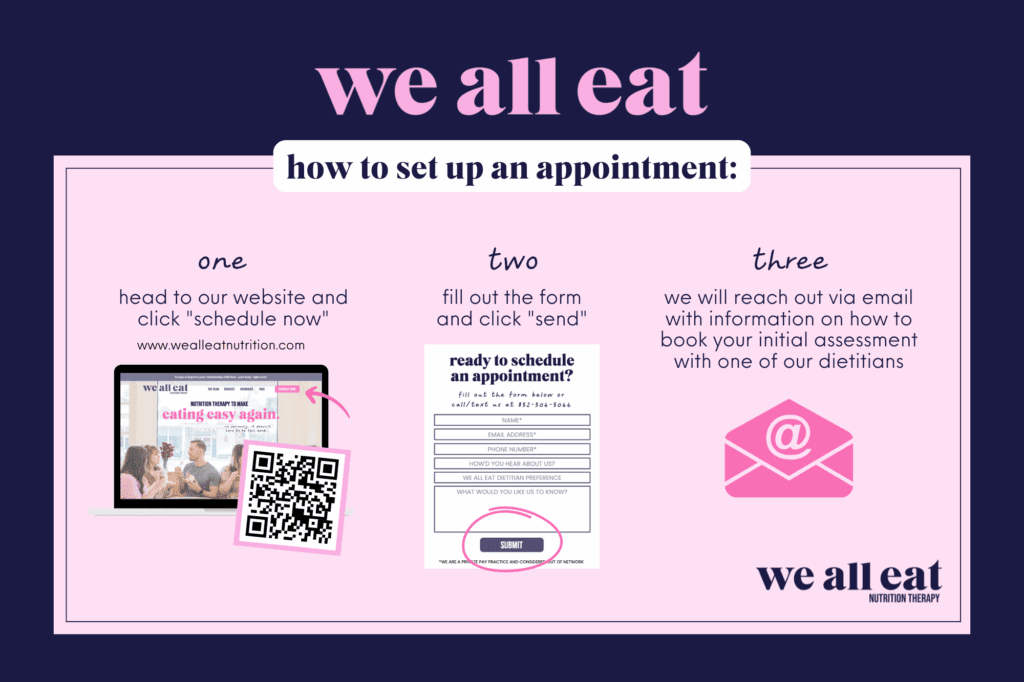
📅 Book a session with one of our non-diet dietitians here or call/text 832-304-3044 and we’ll help you take the first step.
Together, let’s create space for nourishment, curiosity, and compassion—both at the table and beyond.

